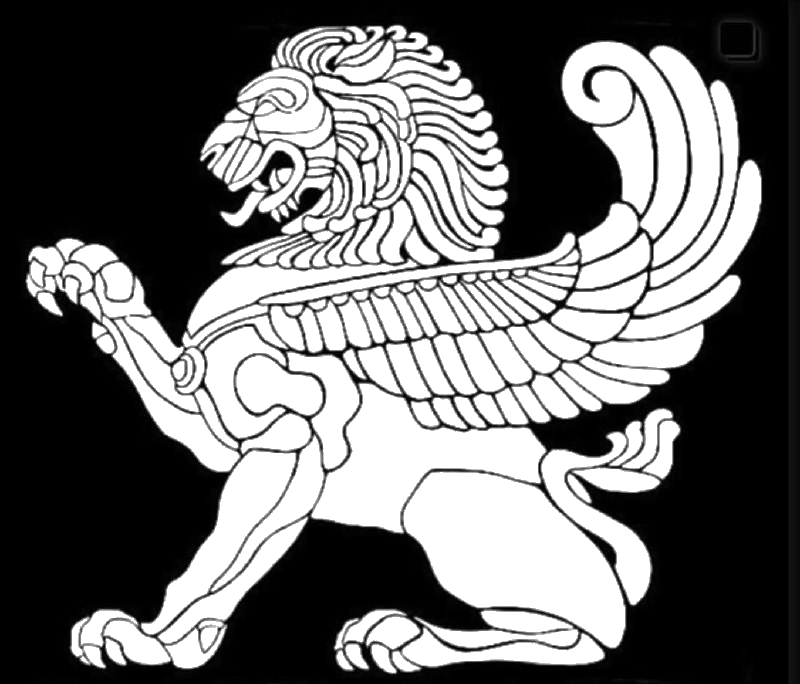
Simurgh’s View: Life from Life — A Persian Counter-Theology to Abrahamic War
As the United States and Israel bomb Iran, Simurgh’s View builds educational infrastructure rooted in ancient Persian wisdom to teach children that life creates life—not destruction.
The Theological Problem: Creation Ex Nihilo Enables Annihilation
Abrahamic Theology’s Fatal Flaw
Core Doctrine: God creates ex nihilo (from nothing)
“In the beginning God created the heavens and the earth. Now the earth was formless and empty…” — Genesis 1:1-2
The Implication:
If a force can create from absolute nothing, it can return creation to absolute nothing. The same omnipotence that speaks worlds into existence can speak them out of existence.
Three Abrahamic Traditions, One Logic:
- Judaism/Zionism: Covenant with chosen people → others are expendable
- Christianity/Capitalism: Salvation for believers → the unsaved can be destroyed
- Islam/Shia Theocracy: Submission to Allah → apostates/infidels can be eliminated
What They Share:
- Monotheism: Single absolute authority (mirrors dictatorship)
- Patriarchy: Father-god, male prophets, male authority structures
- Apocalypticism: Final judgment, end times, cosmic war between good and evil
- Ex Nihilo Creation: If God made something from nothing, God can unmake it
The War Logic
When you believe a deity creates from nothing:
- Human life is contingent, not sacred
- Destruction is theologically permissible (God’s will)
- Enemies can be annihilated (returned to nothing)
- Apocalypse is desirable (hastens divine plan)
March 2026 Reality:
- United States (Christian-capitalist): Bombing Iran to “restore order”
- Israel (Zionist-nationalist): Bombing Iran, Lebanon, Gaza to “defend existence”
- Iran (Shia-theocratic): Fighting back to “defend Islam”
All three invoke the same structure: A transcendent authority (God, Democracy, Ummah) justifies mass violence because human life—created from nothing—can be returned to nothing.
Simurgh’s Wisdom: Life from Life, Not Death from God
Ancient Persian Cosmology — Pre-Abrahamic
Simurgh (سیمرغ): The all-knowing bird, the sacred mother
Origin: Pre-Islamic Persian mythology, Zoroastrian roots (possibly older)
Key Attributes:
- Maternal, not paternal — She nurtures, doesn’t command
- Omniscient, not omnipotent — She knows all, but doesn’t control all
- Life-giving, not death-dealing — She heals, protects, guides
Theological Difference:
| Abrahamic God | Persian Simurgh |
|---|---|
| Creates ex nihilo (from nothing) | Sustains ex vita (from life) |
| Omnipotent authority | Wise guide |
| Commands obedience | Nurtures growth |
| Judges and punishes | Heals and protects |
| Father/King metaphor | Mother/Caretaker metaphor |
| Linear time (beginning → end) | Cyclical time (eternal return) |
| Apocalypse (final destruction) | NowRuz (perpetual renewal) |
Life from Life: The Mycelial Principle
Zoroastrian Ethics (underlying Persian thought):
- Humata: Good thoughts
- Hukhta: Good words
- Hvarshta: Good deeds
The Principle: Life emerges from existing life through care, not from nothing through command.
Biological Parallel — Mycelial Networks:
Fungal mycelium doesn’t dominate—it connects:
- Transfers nutrients between trees (mutual aid, not competition)
- Decomposes death into nutrients (regeneration, not annihilation)
- Creates conditions for life (emergence, not command)
Simurgh operates like mycelium:
- Connects (events, people, knowledge)
- Regenerates (heals wounds, restores heroes)
- Creates conditions (wisdom that enables growth)
This is why Univrs.io uses “mycelial” as core metaphor: Regenerative entropy, not degradative. Life accelerating through care, not destroyed through command.
NowRuz: The Eternal Return of Life
NowRuz (نوروز): Persian New Year, spring equinox (March 20/21)
Meaning: “New Day” — the moment when day equals night, balance returns
Not a linear “new year” (January 1 is arbitrary)
But cyclical renewal (spring returns every year, life emerges from winter)
The Symbolism:
- Haft-sin table: Seven items starting with ‘S’ (sprouted wheat, apples, garlic, sumac, vinegar, coins, hyacinth) — representing life’s abundance
- Fire jumping (Chaharshanbe Suri): Leap over fire to burn away last year’s sickness, welcome new life
- Spring cleaning: Remove old, make space for new growth
Theological Message:
Life doesn’t need a creator-god to start it—life renews itself through cycles. Winter (death) always yields to spring (life). This is eternal, not contingent on divine whim.
Why NowRuz Matters in March 2026:
As bombs fall on Iran, NowRuz (March 20) approaches—a 3,000-year-old festival celebrating life’s perpetual renewal. The timing is not coincidental. Abrahamic powers try to annihilate, but Persian wisdom teaches: Life persists. Spring returns. Simurgh endures.
Woman, Life, Freedom: The Slogan’s Deep Roots
Zan, Zendegi, Azadi (زن، زندگی، آزادی)
Context:
Slogan of 2022 Iranian protests after Mahsa Amini’s death (killed by morality police for improper hijab)
Surface Reading: Feminist protest against theocratic patriarchy
Deeper Reading: Invocation of ancient Persian values suppressed by Islamic Republic
The Triple Principle
1. Zan (Woman) — زن
Not “women’s rights” as liberal addendum
But Woman as sacred principle of creation
In pre-Islamic Persian mythology:
- Anahita: Goddess of water, fertility, life-giving force
- Simurgh: Maternal wisdom, protector of heroes
- Earth as feminine: Spenta Armaiti (Zoroastrian concept of sacred earth, female)
Contrast: Abrahamic traditions subordinate women (Eve from Adam’s rib, Hagar expelled, Fatimah’s contested status)
The Statement: Life comes from women (literal and symbolic), not from male god’s command
2. Zendegi (Life) — زندگی
Not “right to life” as legal claim
But Life as sacred in itself, not contingent on obedience to god/state
Persian Wisdom:
- Life is inherently valuable (doesn’t need divine justification)
- Life creates more life (ex vita, not ex nihilo)
- Life is interconnected (mycelial, not hierarchical)
Contrast: Abrahamic logic allows “justified killing” (holy war, capital punishment, collateral damage) because life’s value is contingent on alignment with God’s will
3. Azadi (Freedom) — آزادی
Not “freedom” as Western individualism
But Freedom as natural state of life, unconstrained by domination
Zoroastrian Concept:
- Humans have free will (Aka Manah, “good mind”) to choose good thoughts/words/deeds
- Freedom is responsibility to creation, not license to exploit
- Liberty is collective flourishing, not individual accumulation
Contrast: Capitalist “freedom” = freedom to dominate markets, Islamist “freedom” = submission to Sharia, Zionist “freedom” = freedom for chosen people only
The Synthesis: Woman, Life, Freedom as Persian Counter-Theology
What the slogan actually means:
Life emerges from women (generative principle), is sacred in itself (not contingent), and flourishes through freedom (non-domination). This is ancient Persian wisdom: Life from life, not death from god.
Why it terrifies theocrats:
It invokes a pre-Islamic worldview that Islam suppressed. The Islamic Republic isn’t just fighting feminism—it’s fighting 3,000 years of Persian cosmology that contradicts Abrahamic monotheism.
Why it resonates globally:
It offers an alternative to all three Abrahamic patriarchal systems (Capitalism, Zionism, Islamism) currently bombing each other.
Three-Layer Analysis: Simurgh’s View as Pedagogical Resistance
Layer 1: Theological/Philosophical — The Cosmological Inversion
Abrahamic Theology:
GOD (transcendent, all-powerful)
  ↓ creates ex nihilo
UNIVERSE (contingent, destructible)
  ↓ hierarchy
HUMANS (obedient or damned)
  ↓ dominion over
NATURE (resource, exploitable)
Outcome: Linear history (creation → fall → redemption → apocalypse), justified violence, expendable life
Persian/Simurgh Theology:
LIFE (immanent, interconnected)
  ↓ emerges ex vita
CYCLES (seasons, generations)
  ↓ nurtures
HUMANS (responsible participants)
  ↓ care for
NATURE (sacred, partner)
Outcome: Cyclical time (perpetual renewal), care-based ethics, sacred life
Simurgh’s Role:
She observes and guides, but doesn’t create or destroy. She’s the personification of accumulated wisdom, not divine command. When heroes need help, she provides knowledge/healing, not miracles. She enables agency, not obedience.
Pedagogical Implication:
Teaching history through Simurgh’s eyes means teaching emergence (how things came to be through care/connection) not causation (how powerful men commanded events).
Layer 2: Political/Cultural — Resistance to Patriarchal Narrative Control
The War as Theological Enactment:
- US bombs Iran → Enacting Christian-capitalist “creative destruction” (Schumpeter’s ex nihilo economics)
- Israel bombs Iran → Enacting Zionist “defensive annihilation” (chosen people vs expendable others)
- Iran fights back → Enacting Shia “martyrdom logic” (death as path to paradise)
All three share: Life is expendable, destruction is justified, apocalypse is acceptable
Simurgh’s View as Counter-Narrative:
While three patriarchal systems (descended from Abraham) enact their theology of creation-from-nothing enabling destruction-to-nothing, Simurgh’s View builds infrastructure teaching:
- HERstory not History — Maternal wisdom, not paternal command
- Multi-dimensional layers — No single “main” narrative (rejection of monotheistic singularity)
- Emergence not causation — How life created conditions for more life
- Connection not hierarchy — Events linked through care/influence, not power
- Cyclical not linear — NowRuz (renewal) not Judgment Day (annihilation)
The Political Stakes:
Who controls how history is taught controls what futures are imaginable.
- If history = wars, empires, conquest → Future = more violence
- If history = care, emergence, connection → Future = regeneration
Simurgh’s View teaches the second. During a war justified by the first.
This is not neutral education. This is counter-hegemonic knowledge infrastructure.
Layer 3: Technical/Pedagogical — Mycelial Architecture as Life-From-Life
How Simurgh’s View Embodies Persian Wisdom Technically:
A. Multi-Dimensional Layers = Rejection of Monotheistic Singularity
8 Parallel Layers:
- Cosmos
- Earth
- Life
- Society
- Conflict
- Science
- Culture
- Philosophy
Why This Matters:
Abrahamic monotheism: One God → One Truth → One Narrative
Persian pluralism: Multiple dimensions coexist, none dominates
Technical Implementation:
- Users toggle layers on/off (choose perspectives)
- No default “main” story (unlike textbooks that center political/military history)
- Women’s History is full layer (not sidebar/footnote)
- Culture/Philosophy equal weight to Conflict (care = violence in importance)
This is theological resistance encoded in UX design.
B. CRDTs = Mycelial Knowledge Growth
Conflict-Free Replicated Data Types (CRDTs):
- Multiple users edit simultaneously
- No central authority resolves conflicts
- Knowledge emerges from distributed contributions
- Like mycelial networks: no center, all nodes contribute
Contrast:
- Centralized database = Monotheistic model (single source of truth)
- CRDTs = Mycelial model (truth emerges from network)
Simurgh doesn’t dictate history—she observes it emerging from collective wisdom.
C. AI Agent Swarm = Life-From-Life Knowledge Assembly
8 Specialized Agents:
- WikiAgent, NewsAgent, ScienceAgent, ClassifierAgent, ConnectorAgent, VerifierAgent, SummaryAgent, VisualAgent
Not one omniscient AI (god-like authority)
But swarm intelligence (mycelial collective)
Each agent:
- Specializes (like organisms in ecosystem)
- Contributes (adds to collective knowledge)
- Validates (cross-references with others)
- Doesn’t command (proposes for human review)
This is Assembly Theory + Mycelial Biology:
Knowledge isn’t created (ex nihilo by authority)
Knowledge is assembled (ex vita through validation/connection)
Higher assembly index (more sources, more connections, more validation) = more reliable knowledge
Just as Simurgh’s wisdom comes from observing all of time (high assembly index of experience), the timeline’s knowledge comes from high assembly index of sources.
D. Local-First = Data Sovereignty as Sacred Life
Users own their data:
- Stored locally (IndexedDB, SQLite WASM)
- Synced optionally (CRDTs)
- Exportable (not locked in)
Why This Is Persian Wisdom:
Abrahamic model: Submit to central authority (church, state, platform)
Persian model: Individual agency within collective (Aka Manah, “good mind” = free will within ethical responsibility)
Technical implementation of Zoroastrian free will:
- Users choose what to explore (curiosity-driven, not curriculum-mandated)
- Users own their learning (data sovereignty)
- Users contribute to collective (collaborative timelines)
Freedom (Azadi) encoded in architecture.
E. NowRuz Logic = Continuous Renewal, Not Static Canon
Traditional textbooks:
- Printed, frozen in time
- Authoritative (this IS history)
- Linear (read start to finish)
Simurgh’s View:
- Live updates (GDELT 15-minute feed, daily Wikipedia changes)
- Provisional (disputed facts show multiple perspectives)
- Non-linear (scroll where curiosity leads)
Like NowRuz (spring returns every year), knowledge renews continuously.
No final authoritative version (rejection of apocalyptic thinking)
Perpetual emergence of new understanding (cyclical wisdom)
The Synthesis: Simurgh as Life-Giving Force
What Simurgh Represents
Not a deity (doesn’t create or destroy)
But a principle: Life accumulates wisdom through care across time
Her attributes:
- Observes all (knows history from Big Bang to now)
- Nurtures heroes (heals Zāl, protects Rostam)
- Never commands (offers wisdom, doesn’t enforce)
- Connects across time (appears at crucial moments across generations)
- Regenerates life (her feathers heal, her guidance saves)
This is the principle Ferdowsi.app embodies:
- Knowledge = accumulated care (AI agents validate, users contribute)
- Wisdom = connection (events link through relationships, not hierarchy)
- Learning = emergence (curiosity-driven exploration, not imposed curriculum)
- History = life creating life (generations building on prior generations)
The Theological Statement
By building itself while three Abrahamic powers bomb each other, Simurgh’s View declares:
Life is not contingent on god’s whim.
Life emerges from life through care.
Wisdom accumulates through observation, not command.
Knowledge liberates when it connects, not when it dominates.
Spring returns (NowRuz), no matter how brutal the winter.
Woman, Life, Freedom are not slogans—they are cosmological truths.
And the kids learning from this timeline absorb:
Violence is not inevitable (it’s a choice enabled by ex nihilo theology)
Care is generative (mycelial, not extractive)
History is plural (many perspectives, not one truth)
I can contribute (collaborative timelines, not passive consumption)
Knowledge is mine (data sovereignty, not platform control)
This is pedagogy as theology.
Education as resistance.
Software as prayer to Simurgh’s life-giving wisdom.
The Work: Building HERstory as Anti-War Activism
Ferdowsi.app — Active Resistance, Not Passive Commentary
This isn’t theoretical. While bombs fall on Iran, Simurgh’s View (ferdowsi.app) is actively being built as anti-war activism.
The Project:
- Interactive 3D timeline: Big Bang (13.8B years ago) → Present second
- 8 dimensional layers: Cosmos, Earth, Life, Society, Conflict, Science, Culture, Philosophy
- Multi-user platform: Local-first CRDTs, community curation, collaborative timelines
- AI agent swarm: Real-time data from Wikipedia, GDELT, arXiv, OpenAlex
- HERstory framing: Women’s History as full layer, maternal wisdom as guide
Current Status:
- Phase 1 complete: Prototype deployed at ferdowsi.app
- Phase 2 in progress: Live data pipeline, Wikidata integration, target 2,000+ events
- Repository: github.com/univrs/ferdowsi.app
Why This Is Anti-War Work
Traditional anti-war activism:
- Protests (easily suppressed)
- Op-eds (preaching to converted)
- Petitions (ignored by power)
Simurgh’s View anti-war activism:
- Builds alternative narrative infrastructure (doesn’t just critique existing narratives)
- Teaches next generation (changes what futures are imaginable)
- Encodes ethics in architecture (local-first = sovereignty, CRDTs = non-hierarchical, multi-layer = pluralism)
- Creates conditions for emergence (Assembly Theory pedagogy)
- Persists beyond current war (knowledge infrastructure outlasts political moment)
The Statement This Work Makes
While three Abrahamic patriarchal systems bomb each other:
- US/Capitalism bombs Iran → Simurgh’s View builds infrastructure showing cooperation > competition
- Israel/Zionism bombs Iran → Simurgh’s View builds infrastructure centering Persian/feminine wisdom
- Iran/Shia Islam bombs back → Simurgh’s View builds infrastructure invoking pre-Islamic Persian values
The work declares:
You are destroying in the name of gods who create from nothing.
I am building in the name of Simurgh who nurtures from life.
You teach children that violence is destiny.
I teach my children that care creates conditions for flourishing.
You enact linear apocalypse (creation → destruction).
I encode cyclical renewal (NowRuz, perpetual spring).
This is not commentary on the war. This is counter-war infrastructure.
NowRuz 2026: Spring Returns Despite Bombs
March 20, 2026 — NowRuz (Persian New Year, spring equinox)
What the bombers believe:
- Iran can be destroyed back to submission
- Spring can be prevented through sufficient violence
- Life is contingent on their god’s will
What Simurgh’s View demonstrates:
- Spring returns (cyclical time, not linear destruction)
- Life persists (mycelial networks regenerate)
- Knowledge assembles (despite attempts to destroy infrastructure)
By NowRuz 2026, Simurgh’s View will have:
- Completed Phase 2 (2,000+ live events)
- Integrated real-time GDELT feed (showing current war in historical context)
- Deployed AI agent swarm (continuous knowledge assembly)
- Enabled collaborative timelines (letting kids contribute their perspective)
His kids will scroll through:
- 13.8 billion years of cosmic emergence
- 4 billion years of biological evolution
- 300,000 years of human cooperation
- 3,000 years of Persian wisdom
- 2,026 years of attempted patriarchal domination
- March 2026: The current war framed as aberration, not destiny
And they’ll learn:
Wars are temporary.
Care is ancient.
Violence is a choice enabled by bad theology.
Life creating life is the older, deeper pattern.
Spring returns. Always.
The Activist’s Choice
Two responses to patriarchal war:
- Reactive: Protest, critique, despair (valid but exhausting)
- Generative: Build alternative infrastructure (persistent, multiplicative)
Simurgh’s View chose the second.
Not “stop the war” (though he wishes it would stop).
But “build conditions where next generation sees war as preventable mistake, not inevitable fate.”
This is long-term activism:
- Not winning this news cycle
- But changing what stories kids grow up believing
- Not preventing this war
- But making next generation less likely to wage the one after
And it works through:
- Software architecture (encoding ethics in UX)
- Historical framing (HERstory, not History)
- Pedagogical method (curiosity-driven exploration, not authoritative lecture)
- Theological intervention (ex vita vs ex nihilo)
- Cultural reclamation (Persian wisdom, pre-Islamic values)
Ferdowsi (1010 CE) resisted Arabization by writing Shahnameh in Persian verse.
Simurgh’s View (2026 CE) resists patriarchal apocalypse through open-source code.
Both are counter-hegemonic knowledge projects disguised as cultural/educational work.
Both persist longer than the empires trying to erase them.
Join the Work
Ferdowsi.app is open source. (Repository: github.com/univrs/ferdowsi.app)
You can contribute:
- Add events (community curation)
- Translate (make it accessible beyond English/Persian)
- Code (help build the AI agent swarm)
- Fund (support development without ads/tracking)
- Use it (teach your kids HERstory)
- Fork it (build your own counter-narrative timeline)
The work is anti-war activism because:
- It creates conditions for life-affirming education
- It demonstrates alternatives to patriarchal violence
- It persists beyond current political moment
- It changes what futures are imaginable
- It teaches: Violence is not inevitable. Care is ancient. Spring returns.
As bombs fall, build the infrastructure that outlasts bombs.
Conclusion: As Bombs Fall, Teach Life
March 2026:
- US carpet-bombs Iranian infrastructure
- Israel strikes Tehran with precision weapons
- Iran fires missiles at Tel Aviv, Doha, Abu Dhabi
- Oil prices spike, Asia rations fuel
- Europe admits “vulnerability” to fossil fuel dependence
- Three Abrahamic patriarchal systems enact their theology: Creation ex nihilo → Annihilation to nothing
March 2026:
- Simurgh’s View is being built for children
- Teaching: Life from life, not death from god
- Encoding: Mycelial wisdom in software architecture
- Preparing: NowRuz (March 20) — spring returns, despite war
- Demonstrating: Regenerative entropy exists, apocalypse is not destiny
The Persian Counter-Theology:
You cannot bomb spring into not arriving.
You cannot decree NowRuz into not happening.
You cannot destroy the principle that life creates life.
You can destroy bodies, infrastructure, cities.
But Simurgh—the accumulated wisdom that life persists through care—endures.
And when children scroll through 13.8 billion years of cosmic and human history via Simurgh’s View, they learn:
The universe didn’t need a creator-god.
Life emerged from chemistry, not command.
Humans thrived through cooperation, not conquest.
Women created life, literally and culturally.
Care networks (mycelial) > Power hierarchies (patriarchal).
Spring always returns.
That lesson—learned young, encoded deep—is the antidote to patriarchal apocalypse.
Simurgh’s View is not just educational software.
It’s theological resistance.
It’s liberation infrastructure for minds.
It’s how you teach kids that violence isn’t destiny.
And right now, as bombs fall, that might be the most important thing anyone is building.
Woman, Life, Freedom. Life from Life. Spring Returns.
Zan, Zendegi, Azadi.
زن، زندگی، آزادی
NowRuz Mobarak. (نوروز مبارک)
Happy NowRuz—may the new day bring renewal, not annihilation.
Written by Sepah, March 10, 2026
As the United States and Israel bomb Iran, and spring approaches
For all children who deserve to learn that life persists
Related:
- Ferdowsi.app — Simurgh’s View interactive timeline
- GitHub Repository — Technical architecture