The Hidden Geopolitical Layer of the Iran Prosperity Project
Why Many Analysts Think the IPP Is Actually a Signal to Washington, Tel Aviv, and Gulf States — Not Just a Policy Plan
Introduction: Reading the IPP as Geopolitical Communication
On the surface, the Iran Prosperity Project (IPP) presents itself as a technocratic reconstruction blueprint — white papers, economic modeling, transition governance frameworks. But a deeper reading, informed by the institutional origins, personnel networks, timing, and content choices of the project, reveals a second layer: the IPP functions as a sophisticated diplomatic signaling document aimed at three primary audiences — Washington’s policy establishment, the Israeli government, and the Gulf Arab states.
This is not unusual. Exile opposition movements throughout modern history have produced policy documents that serve dual purposes: internally, they organize the diaspora around a common vision; externally, they communicate to foreign capitals that the opposition is “ready,” credible, and aligned with the strategic interests of potential backers. The IPP fits this pattern precisely.
1. The Institutional Network: NUFDI, FDD, and the Washington Policy Circuit
Understanding the IPP’s geopolitical layer begins with its institutional DNA. The project was developed by the National Union for Democracy in Iran (NUFDI), a Washington, D.C.-based nonprofit that has for years promoted regime change with Pahlavi’s support. NUFDI is not merely a diaspora civic organization — it functions as a policy interface between the Iranian exile opposition and the American foreign policy establishment.
The IPP’s chief architect and director, Saeed Ghasseminejad, simultaneously holds a senior advisory position at the Foundation for Defense of Democracies (FDD), one of Washington’s most prominent neoconservative think tanks. FDD has been described by multiple analysts and media organizations as a hawkish, pro-Israel advocacy organization that was instrumental in shaping the Trump administration’s “maximum pressure” Iran policy, opposing the JCPOA nuclear deal, and pushing for aggressive sanctions regimes.
This dual affiliation is not incidental. It places the IPP directly within a policy ecosystem that has for decades argued that regime change in Iran is both desirable and achievable, and that a post-Islamic Republic Iran should be Western-aligned, pro-market, and normalized with Israel.
Critical implication: The IPP was not designed in a vacuum of technocratic neutrality. It was produced within a network whose core strategic commitment — the end of the Islamic Republic and Iran’s reorientation toward the Western security architecture — predates and frames every policy recommendation in the document.
Critics at LobeLog and elsewhere have characterized Ghasseminejad as part of what they call Iran’s “fake opposition” — individuals who support economic sanctions and military pressure against Iran while presenting themselves as advocates for the Iranian people. FDD itself hosted the IPP’s unveiling events and has continued to provide institutional support and media amplification for the project.
This tight coupling between the IPP and a neoconservative think tank with well-documented pro-Israel advocacy positions is central to understanding the project’s geopolitical signaling function.
2. Signal to Washington: “We Are a Government-in-Waiting”
The IPP’s most immediate audience is the United States government and the broader Washington policy community.
What the IPP communicates to Washington:
a) The opposition is organized and technocratically competent. The single most damaging criticism of exile opposition movements — from Iraq’s Ahmed Chalabi to Libya’s transitional council — has been that they have no viable plan for governance. The IPP directly addresses this by producing the form of a governing program: budgets, timelines, institutional frameworks, sector-by-sector white papers.
Whether or not these plans are operationally realistic, they perform the crucial function of signaling seriousness to policymakers who evaluate opposition movements partly on their perceived capacity to govern.
b) A post-Islamic Republic Iran will be “open for business” to Western capital. The IPP’s economic philosophy is explicitly neoliberal: private property rights, market mechanisms, fiscal discipline, independent central banking, foreign direct investment, WTO integration. This is not merely an economic preference — it is a geopolitical promise. It tells Washington and Western financial institutions that a Pahlavi-aligned transition government would dismantle Iran’s state-dominated economic structure and integrate the country into the global financial system on Western terms.
This directly addresses American and European concerns about what kind of economic partner a post-regime Iran would become.
c) The Iraq nightmare won’t repeat. The IPP’s three-phase structure — emergency stabilization, institutional reconstruction, long-term modernization — is explicitly designed to counter the “Iraq 2003” objection that has paralyzed Western policymakers for two decades. By providing a detailed 180-day roadmap, the project signals that this transition, unlike de-Baathification in Iraq, has been pre-planned. The document’s own framing draws on lessons from post-communist transitions in Eastern Europe and even Brexit’s legal continuity model.
d) The nuclear file will be resolved. The Emergency Phase Booklet includes commitments to international verification and transparency of Iran’s nuclear program. The Bulletin of the Atomic Scientists noted that these provisions could serve as a starting point for IAEA engagement, though critics observed that the plan lacks commitment to immediate down-blending of enriched uranium. Regardless of the technical gaps, the signaling value is clear: a Pahlavi transition would end the nuclear standoff on terms favorable to the nonproliferation regime and, by extension, to Washington.
Washington’s ambivalent reception:
Despite this signaling, Washington’s response has been cautious. Trump himself expressed skepticism about Pahlavi, preferring “internal leadership” and questioning whether someone who has lived in exile for nearly five decades can mobilize domestic support. The comparison to Venezuela’s transition — where the U.S. backed an insider figure rather than an exile — suggested that the administration was not prepared to adopt the IPP wholesale as its Iran policy.
This gap between the IPP’s signaling intent and Washington’s actual reception is itself analytically significant. It suggests that while the IPP successfully communicates technocratic competence, it has not yet overcome the deeper strategic question: does the U.S. want a managed transition in Iran, or does it prefer the strategic ambiguity of a weakened but surviving state?
3. Signal to Tel Aviv: The Cyrus Accords Framework
The IPP’s relationship with Israel is perhaps its most controversial geopolitical dimension — and the one that critics identify as the clearest evidence that the project serves foreign strategic interests rather than a purely Iranian democratic agenda.
The Pahlavi-Netanyahu alignment:
Reza Pahlavi visited Israel in April 2023, met with Prime Minister Netanyahu, prayed at the Western Wall, and visited Yad Vashem. He has publicly advocated for what he calls the “Cyrus Accords” — a normalization framework between Israel and a future Iran, modeled on the Abraham Accords but framed through the historical narrative of Cyrus the Great permitting the Jews to rebuild the Temple.
An Israeli cabinet minister, Gila Gamliel, publicly endorsed Pahlavi for regime change — the first time a Netanyahu government member explicitly expressed Israeli support for his leadership. A delegation of experts dispatched by Pahlavi visited Israel to receive technical knowledge and expertise, with Gamliel stating: “We truly believe Iranians and Israelis must return to cooperation dating back 2,500 years.”
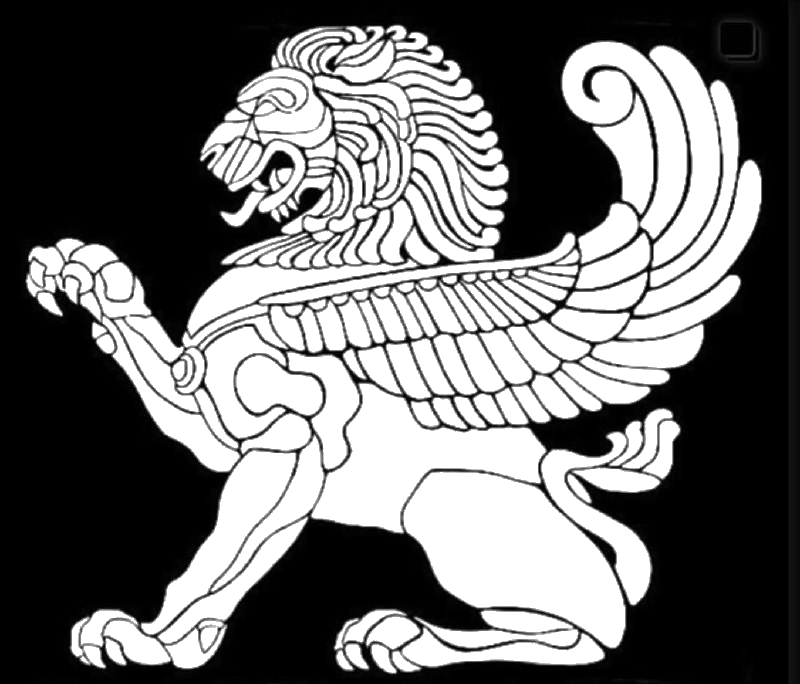
The operation name Israel chose for its February 2026 strikes on Iran — “Rising Lion” — was widely interpreted as referencing the Pahlavi family emblem (the Lion and Sun), suggesting a deliberate symbolic linkage between the military campaign and the Pahlavi political project.
What the IPP signals to Israel:
a) The end of the “resistance axis.” The IPP implicitly promises the dissolution of Iran’s network of proxy relationships — Hezbollah, Hamas support structures, the Houthis, Iraqi militias. This is Israel’s primary strategic interest in regime change: not democracy in Iran per se, but the elimination of the asymmetric warfare network that has constrained Israeli military freedom of action across the region.
b) Iran-Israel normalization. The Cyrus Accords concept, embedded in the broader IPP framework, offers Israel something unprecedented: the prospect of diplomatic normalization with the largest and most strategically significant country in the region. This would complete the arc begun by the Abraham Accords with Gulf states.
c) Nuclear disarmament through regime change. Israel has spent decades attempting to prevent Iran’s nuclear program through sabotage, diplomacy, and military threats. The IPP offers a different pathway: regime change produces a government that voluntarily submits to nonproliferation norms and international verification.
The criticism:
This alignment has generated fierce opposition from multiple directions within the Iranian political spectrum. Critics at EA WorldView argued that Pahlavi “framed Israel’s military campaign against Iran as an ‘opportunity’ for political transformation,” calling for an approach relying heavily on external military intervention rather than organic grassroots movement. The same analysis suggested that associating the military operation with the Pahlavi legacy alienated large portions of the Iranian population who view the monarchy as a symbol of repression and foreign dependence.
Jacobin characterized Pahlavi’s ties to Israel as dating back to the early 1980s, when he offered Israeli defense minister Ariel Sharon a plan to oust Iran’s clerics, and described the relationship as one in which “pro-Israel groups saw value in promoting an Iranian face for regime change.”
Al Jazeera reported that monarchist alignment with Israel “raises questions about their motives and how big a portion of the opposition they represent,” noting that mainstream Iranian opinion has historically supported the Palestinian cause, even among those who oppose the Islamic Republic.
The fundamental criticism is this: the IPP’s implicit promise to end Iran’s anti-Israel strategic posture may serve Israeli security interests, but it risks delegitimizing the transition project among Iranians who oppose the Islamic Republic and oppose unconditional normalization with Israel — particularly in the context of ongoing conflict in Gaza and the broader region.
4. Signal to the Gulf States: Post-Regime Iran as an Economic Partner, Not a Threat
The third geopolitical audience is the Gulf Cooperation Council (GCC) states — Saudi Arabia, the UAE, Qatar, Kuwait, Bahrain, and Oman.
What the IPP signals to the Gulf:
a) End of Iranian military adventurism. The IPP’s commitment to dissolving or reforming the IRGC, ending proxy warfare, and establishing civilian control of the military addresses the Gulf states’ primary security concern: Iran’s projection of power through asymmetric warfare and its threats to Gulf energy infrastructure and shipping.
b) Energy market stabilization. The IPP’s energy reform plans — modernizing infrastructure, moving to market pricing, reintegrating into global energy markets — signal a future Iran that operates as a conventional energy producer and competitor rather than a destabilizing force that weaponizes the Strait of Hormuz. For Gulf states whose entire economic model depends on stable energy flows and predictable markets, this is enormously significant.
c) Investment opportunities. A post-regime Iran with 88 million consumers, vast natural resources, and a well-educated diaspora represents one of the largest untapped markets in the world. Gulf sovereign wealth funds (Abu Dhabi’s ADIA, Saudi Arabia’s PIF, Qatar Investment Authority) would be natural investors in Iranian reconstruction. The IPP’s pro-market framework essentially opens Iran to Gulf capital.
d) Regional security architecture without Iran as an adversary. The IPP envisions Iran rejoining the regional and global order as a status quo power rather than a revolutionary one. For Gulf states that have spent decades balancing between accommodating and containing Iranian power, this represents a fundamental strategic realignment.
The Gulf’s complicated calculus:
The current crisis has made this signaling both more relevant and more fraught. Iran’s retaliatory strikes following the U.S.-Israeli bombardment targeted Gulf infrastructure extensively — the UAE absorbed more Iranian projectiles than Israel itself. Saudi oil facilities, Qatari LNG production, and Dubai’s port and airport infrastructure were all hit.
Gulf capitals face a strategic dilemma that the IPP’s vision doesn’t fully resolve. The International Crisis Group noted that Gulf leaders worry about what comes after: “Israel may well welcome Iran’s disintegration into a failed, fragmented state, which would be a persistent drag on regional peace and prosperity. The Trump administration has done nothing to allay this concern.”
Saudi Arabia, Turkey, Egypt, and Pakistan are described by some analysts as emerging “status-quo powers” concerned not only about Iranian aggression but about unchecked Israeli military dominance in a post-Iran Middle East. For these states, the IPP’s implicit alignment with Israeli strategic objectives raises questions about whether a Pahlavi-led Iran would serve Gulf interests or merely substitute one form of regional imbalance for another.
5. The IPP as a “Prospectus” — Reading Between the Lines
Perhaps the most analytically precise way to understand the IPP’s geopolitical layer is as a political prospectus — analogous to the document a company produces before an IPO.
Just as a corporate prospectus communicates to potential investors that the company has a viable business plan, competent management, and attractive growth prospects, the IPP communicates to potential geopolitical backers that:
- The opposition has a governing plan (the white papers)
- The leadership is credible (Pahlavi’s diaspora network and media presence)
- The returns on investment are attractive (access to Iranian markets, energy resources, and strategic realignment)
- The risks are managed (phased transition, no “Iraq scenario”)
This framing explains several features of the IPP that are puzzling if read purely as a domestic policy document:
Why launch in Washington, not in Persian? The project was unveiled at a conference in Washington, D.C. The primary audience was clearly the American policy establishment, not Iranian citizens who lack internet access under regime censorship.
Why the heavy emphasis on foreign investment frameworks? A document aimed primarily at Iranians would focus on wages, housing, healthcare, and corruption. The IPP does address these, but its structural emphasis on privatization, FDI, and global market integration speaks to foreign capital rather than domestic needs.
Why the nuclear transparency commitments? These matter to the IAEA, Washington, and Tel Aviv. They are a secondary concern for ordinary Iranians compared to economic survival.
Why the explicit market-liberal economic philosophy? The ten principles outlined — private property, entrepreneurship, free markets, fiscal discipline — read as a commitment to the Washington Consensus. This signals ideological alignment with Western economic institutions more than it reflects a democratic debate among Iranians about their preferred economic model.
6. Historical Parallels: Exile Blueprints as Geopolitical Tools
The IPP is not the first exile policy blueprint to serve a dual signaling function. Historical parallels illuminate both its strategic logic and its risks.
Ahmed Chalabi and the Iraqi National Congress (INC)
The most obvious parallel — and the most cautionary — is Ahmed Chalabi’s Iraqi National Congress, which produced detailed governance blueprints and lobbied Washington extensively in the lead-up to the 2003 Iraq invasion. The INC was closely tied to neoconservative policy networks (including several figures now associated with FDD). Its plans were technocratically sophisticated but disconnected from Iraqi ground realities. The result was catastrophic.
The IPP’s architects are clearly aware of this parallel and have tried to differentiate their project. The Emergency Phase Booklet explicitly draws lessons from Iraq’s de-Baathification failures. But the structural similarity — an exile movement producing policy documents primarily legible to Washington while claiming domestic legitimacy — remains.
The Polish Solidarity Model
A more favorable parallel is Poland’s Solidarity movement, which developed economic reform plans in exile and in underground networks before 1989. These plans, influenced by Western economists, became the basis for Poland’s “shock therapy” transition.
The difference: Solidarity had genuine mass domestic organization and democratic legitimacy through workplace councils. The IPP lacks this domestic institutional base.
The Free French and de Gaulle
De Gaulle’s Free French movement operated from London during World War II, producing governance plans for post-liberation France while maintaining close relationships with Allied powers. De Gaulle balanced foreign backing with fierce insistence on French sovereignty.
The parallel to Pahlavi is instructive: both are figures who claim national legitimacy from exile, but de Gaulle’s legitimacy was ultimately validated by military liberation and popular acclaim. Whether Pahlavi can achieve similar validation remains deeply uncertain.
7. The Structural Tension at the Heart of the IPP
The hidden geopolitical layer of the IPP reveals a fundamental tension that may ultimately determine its success or failure:
The IPP’s geopolitical signaling function and its democratic legitimacy claims are in structural conflict.
To be effective as a signal to Washington, Tel Aviv, and the Gulf, the IPP must commit to specific policy orientations: market liberalism, Western alignment, Israel normalization, IRGC dissolution, nuclear transparency. These commitments are what make the project legible and attractive to foreign backers.
But to be democratically legitimate, a transition plan should emerge from deliberation among Iranians themselves — including those who may prefer a mixed economy, non-alignment, critical engagement with Israel rather than full normalization, or alternative institutional arrangements.
By pre-committing to specific positions that align with foreign strategic interests, the IPP risks foreclosing the very democratic debate it claims to enable.
This tension is not unique to the IPP. It is inherent in every exile movement that seeks foreign backing while claiming to represent popular sovereignty. But it is especially acute in Iran’s case, where the 1953 coup — in which the CIA and MI6 overthrew a democratically elected prime minister to reinstall the Shah — remains the defining trauma of modern Iranian political consciousness.
For many Iranians, the fear is not that the IPP’s policy proposals are individually wrong, but that the process — a diaspora elite producing a governance blueprint in Washington, backed by neoconservative think tanks and endorsed by Israeli officials — reproduces the very dynamic of foreign-imposed governance that fueled the 1979 revolution in the first place.
8. Conclusion: The IPP as a Mirror
The Iran Prosperity Project is best understood not as a single document with a single purpose, but as a mirror that reflects different things to different audiences:
- To the Iranian diaspora, it reflects hope: a detailed vision of what a free Iran could look like.
- To Washington, it reflects strategic alignment: a future Iran that serves American interests in the region.
- To Tel Aviv, it reflects normalization: the end of the “resistance axis” and the beginning of the Cyrus Accords.
- To the Gulf states, it reflects stability: a conventional energy partner rather than a revolutionary threat.
- To Iranians inside Iran, it reflects something more ambiguous: a plan written by people who left, for a country they haven’t lived in for decades, backed by powers whose interests may not align with those of ordinary citizens.
The real question is not whether the IPP is a good policy document — on many technical dimensions, it is the most comprehensive transition plan any Iranian opposition faction has produced.
The real question is whether a document that must serve so many geopolitical masters can simultaneously serve the Iranian people.
That question will be answered not by the quality of the white papers, but by the unfolding events on the ground — and by whether Iranians themselves, when given the opportunity, choose to adopt, modify, or reject the vision that has been prepared for them from abroad.
Analysis compiled from sources including the Atlantic Council, Middle East Forum, Foundation for Defense of Democracies, International Crisis Group, Foreign Policy, The Jerusalem Post, Al Jazeera, EA WorldView, Jacobin, Iran International, the Bulletin of the Atomic Scientists, the Cyrus the Great Institute, and the Forward, among others. March 2026.